
Celebrating the ASP 2025 Primate Welfare Award Winners
This Hot Topics in Primate Welfare, we are featuring the work of the two ASP 2025 Primate Welfare Award winners. Amanda Bartlett, MRes, received the award for her project “Behavior and Vertical Space Use of Captive Callimico (Callimico goeldii): Implications for Welfare.” Rhiannon Schultz, Ph.D., received the award for her project “Developmental and Health-related Variation in Activity and Total Energy Expenditure in Male Western Lowland Gorillas (Gorilla gorilla gorilla).”
Amanda Bartlett – ASP 2025 Meeting Welfare Award Recipient
Behavior and Vertical Space Use of Captive Callimico (Callimico goeldii): Implications for Welfare
Bio: Amanda Bartlett, MRes, is a PhD student with the Universities of Portsmouth and Sparsholt in England. Interested in the welfare and health of zoo-housed primates, particularly the many species of the small neotropical callitrichid family, her previous studies have considered housing and husbandry for callimico (Callimico goeldii) and how this species uses their enclosure space. This project, which was endorsed by the European Association of Zoos and Aquaria’s (EAZA) Taxon Advisory Group, provided an opportunity to look at how enclosures were used by callimico, vertical space use, and the behaviors associated with these to complement husbandry guidelines. She is currently reviewing captive health for multiple species in conjunction with consideration of ‘out of hours’ behavior and seasonality in both zoo and educational animal centre environments.

Where in South America is the native range of callimico monkeys (Callimico goeldii), and what is the species conservation status?
The native range of callimico, which, along with marmosets and tamarins, is a member of the callitrichid family, can be found in the western Amazon basin in Bolivia, Colombia, Northern Brazil, and Peru. This species faces anthropogenic threats to its habitat with commercial, residential and infrastructure development as well as resource and farming pressure leading to ongoing deforestation. Their declining population has them currently classified as vulnerable by the IUCN (The International Union for Conservation of Nature) and they are valued in the pet trade, further contributing to their vulnerable status. (Shanee et al. 2017). There are over 6,000 callimico in zoo-based breeding programs worldwide, supporting the concern regarding their conservation.
What is the natural ecology and behavior of callimico in the wild? How did you use this information to design your study on vertical enclosure use and behavior of callimico in the zoo setting?
In the wild, callimico have been noted to exploit varied habitats, utilizing both primary and bamboo forests, foraging for a varied diet that includes fruits, invertebrates, small vertebrates, and, atypical for a primate, fungi. They have been dubbed understory specialists, with field studies suggesting they occupy a vertical range not exceeding 3-5 m and have been noted to forage terrestrially. With this knowledge, I wanted to explore how callimico use the vertical space in their captive environment. Current husbandry guidelines recommend a generalised minimum enclosure height for callitrichid species of 2.5m.
When you compared the five zoo sites you studied, what did you learn about how the callimico monkeys use vertical enclosure space?
The five zoo sites were markedly different from each other, with some enclosures offering more complex environments through density of planting, accessible furnishings and mixed species. There was a range of group compositions in the exhibits, from a pair of callimico up to a family group of twelve, and the largest enclosure was approximately 240 times larger than the smallest one observed during the study. Interestingly, and importantly from the perspective of species-appropriate enclosure planning, we discovered that up to 70% of behaviors were recorded at an average height of 2 m across the collections, regardless of enclosures with accessible areas far exceeding this. Encouragingly, this suggests that the best practice recommended minimum enclosure height of 2.5 m allows for callimico to exhibit a range of natural behaviors in a way that reflects their natural ecology. However, some of this vertical space use may have been linked to the use of ‘pathways’ located in the enclosure (see below).
What behaviors did you investigate and where did these behaviors occur in the enclosure space?
I was interested in similarities between activity budgets across zoo environments. An ethogram was developed using previous callimico and wider callitrichid resources to identify a range of behaviors, including scanning, locomotion, feeding, foraging, self-grooming, and allo-grooming. Despite the marked differences between the enclosures, I found a similar overall daily pattern in the occurrence of these behaviors. For example, scanning behavior, a distinctive side-to-side sweeping of the head, also noted as vigilance within the literature, was consistently the most performed behavior across the study groups. This is also the most prevalent behavior recorded in wild callimico, and the study average from my observations was the same as the wild budget of 60% of daily activity.
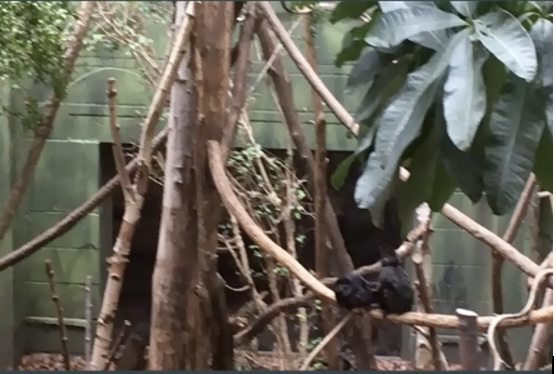
Analysis revealed that there was an association between some behaviors and furnishings within the enclosure spaces with feeding and grooming observed largely on fixed platforms. Locomotion was more likely to take place on ropes or vegetation. Of interest, while the method of locomotion was not specifically recorded as part of the study, it was typified by a predominately hopping and bounding movement (prompted by callimico’s long hindlimbs) in areas where fixed rope or suspended branches created pathways. Where these pathways were less available, locomotion also occurred as trunk-to-trunk leaping, which accounts for 46% travel in wild callimico. This vertical clinging and leaping locomotion is linked to their foraging ecology to access insects and fungi on trunks.
At one of the zoos, the callimico monkeys foraged near levels seen in wild callimico. What were the design features of this enclosure that promoted foraging behavior?
The study found that there was a clear association between the presence of a deep, manipulable substrate in an enclosure and observations of foraging behavior. The enclosure in which near wild levels of foraging behavior were noted was a naturalistic external enclosure incorporating a variety of loose substrate, including bark chips, areas of loose soil, and piles of leaves over two levels. Deep bark substrate also prompted foraging behavior in another of the study enclosures, but terrestrial foraging across the remaining enclosures was often a brief activity, involving the retrieval of fallen food or scattered invertebrates. Compacted soil and concrete surfaces did not encourage foraging behavior. In another enclosure, very densely planted areas appeared to be avoided even though high-value food was scattered into this area. Unlike some other callitrichid species, callimico may be reluctant to place their hands into unknown areas. Noted in wild studies, this may be attributed to a natural avoidance of potential predators, although neophobia has been recorded in captive studies. It may also relate to a more visual rather than tactile foraging technique.
Based on this study, what recommendations can be made to zoos currently housing callimico?
Observations of callimico in this study prompted two main recommendations: to promote both locomotory and foraging behavior. While a limitation of the study was that it did not record the duration of behaviors, both behaviors were noted to be less than observed levels of behavior in the wild, and foraging levels of this behavior were much lower than those recommended in captive husbandry guidelines.
Restricted locomotion can have negative welfare implications, as it is related to increased body mass in captive callitrichids. Also, a less complex environment has been linked to a deterioration in physical ability and, indeed, inexperience in locomotory skills has previously compromised reintroductions into the wild with other callitrichid species such as the Golden Lion Tamarin (Leontopithecus rosalia). Our study revealed that locomotion was associated with zones where the enclosure had fixed, horizontal pathways made from suspended ropes or branches. Given that the natural ecology for callimico is a seasonally changing environment with a range of up to 150 ha, I would recommend zoos be proactive in moving, removing, or adding ropes or branches to provide unpredictability, as well as choice and control with alternative routes to encourage wider use of the vertical space in their restricted environments. In conjunction with foraging enrichment, these could promote higher levels of locomotion through exploration.
With current guidelines recommending that zoos should promote foraging behavior in callitrichid species to be around a third to half their day overall, the levels in the study were markedly short of this. Foraging is deemed to be both a psychologically and physiologically important behavior, and as with locomotion, reintroduction efforts in other callitrichid species have been hampered by inexperience. The association between loose, manipulable substrate and terrestrial foraging supports a recommendation that this should be available in enclosures housing callimico. Scattering or hiding regular food items rather than presenting them in bowls or simply placing them on platforms would be an easy and cost-effective way to promote wider enclosure use and elicit more natural food-seeking behavior. During observations, it was also noted that the highest levels of non-terrestrial foraging occurred in the enclosure with natural planting, leading to a further recommendation that such planting, in both internal and external enclosures, can be an effective way to elicit natural behavior.
My final recommendation is to research multiple zoo settings when possible, assisted by ZooMonitor or other initiatives, to support replication and reproducibility, enabling us to gain the broadest picture possible to support the optimal captive care of these charismatic animals.
What other research is needed to understand how enclosure design can promote the welfare of callimico monkeys in zoo settings?
There are several additional lines of research that would be useful in this area. First, evaluation of enclosure design and furnishing placement that encourages wider use of the stratigraphy of the environment and performance of natural movement reflective of wild callimico patterns and morphology would increase behavioral fitness and health. Second, regarding foraging, evaluating the use of different substrates to promote this behavior could support enclosure design and furnishing. Examination of foraging duration, along with documentation of the full sequence of behaviors that occur during foraging, would provide a clearer picture of how this can be more effectively promoted. For example, examination of the use of whole foods in callimico (and other callitrichid) diets could also complement the findings, as it may encourage prolonged feeding times and requires balance and manipulation.
Third, my study appeared to validate husbandry guidelines for minimum enclosure height for this species, and indeed, a survey I previously conducted with European Association of Zoo and Aquaria collections revealed that the majority of responding zoos provide enclosures that exceed this height (Bartlett et al., 2024). However, empirical evidence for how changes to the enclosures, for example targeted enrichment placement or the introduction of ‘pathways’ at different heights, influence their vertical space use would be useful.
Lastly, complementing our knowledge of their daily enclosure use with how they use their captive space outside of the zoo hours can help us provision species-appropriate sleeping areas, husbandry, and determine whether events in their environments disrupt these patterns of behavior or change how the enclosures are used. Alongside the captive health of callimico and other callitrichid species, I am currently examining the ‘out of hours’ behavior of these species.
Resources:
Bartlett, A., Grinsted L, & Freeman, M. S. (2023). Behaviour, furnishing and vertical space use of captive callimico (Callimico goeldii): Implications for welfare. Animals 13(13), 214; https://doi.org/10.3390/ani13132147
Bartlett, A., Brereton, J. E., & Freeman, M. S. (2024). A comparative multi-zoo survey investigating the housing and husbandry of Callimico goeldii. Journal of Zoological and Botanical Gardens, 5(1), 66-79; https://doi.org/10.3390/jzbg5010005
European Association of Zoos and Aquaria Best Practice Guidelines https://www.eaza.net/BPG/
Zoo Plant https://zooplants.net/index.php/Main_Page
ZooMonitor https://zoomonitor.org/
Rhiannon Schultz – ASP 2025 Meeting Welfare Award Recipient
Developmental and Health-related Variation in Activity and Total Energy Expenditure in Male Western Lowland Gorillas (Gorilla gorilla gorilla)
Bio: Rhiannon Schultz works as a Welfare Consultant with Animal Welfare Expertise, where she advises zoos and aquaria around the world in promoting animal wellbeing. Using a holistic approach to animal welfare, she supports institutions in advancing the care and quality of life of animals in human care. She recently completed her PhD at the University of Georgia, where her research explored how captivity influences gorilla nutrition, physiology, and cardiovascular health. She holds a bachelor’s degree in biological anthropology from the University of California, San Diego, and a master’s degree in biology from Miami University.
Why is it important to understand how gorillas use energy across life stages in zoo settings?
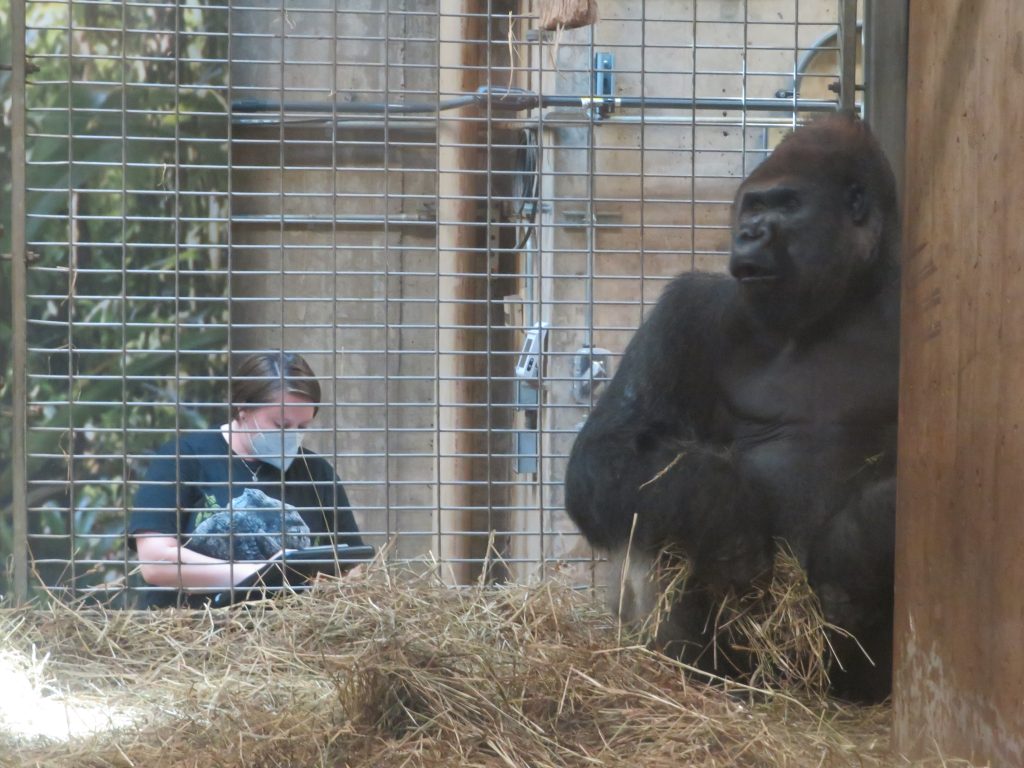
Understanding how gorillas use energy across life stages is essential for managing their health and welfare in zoo environments. Many zoo-housed gorillas experience metabolic and cardiovascular diseases, which are directly related to the balance between diet, activity, and energetic demands. By examining how energy expenditure and behavior change from adolescence through adulthood and into aging, we can better understand when individuals may be most vulnerable to metabolic imbalance, which can lead to serious health consequences. My research shows that energy use is not static across the lifespan and that developmental stages and health conditions influence how gorillas allocate energy and engage in activity. Recognizing these patterns allows zoo professionals to individualize management strategies and tailor diets, feeding strategies, and enrichment to the biological needs of each individual.
How did you measure gorillas activity and energy expenditure? How does this method compare to other methods that can be used to measure energy expenditure (e.g., pros and cons of this method)?
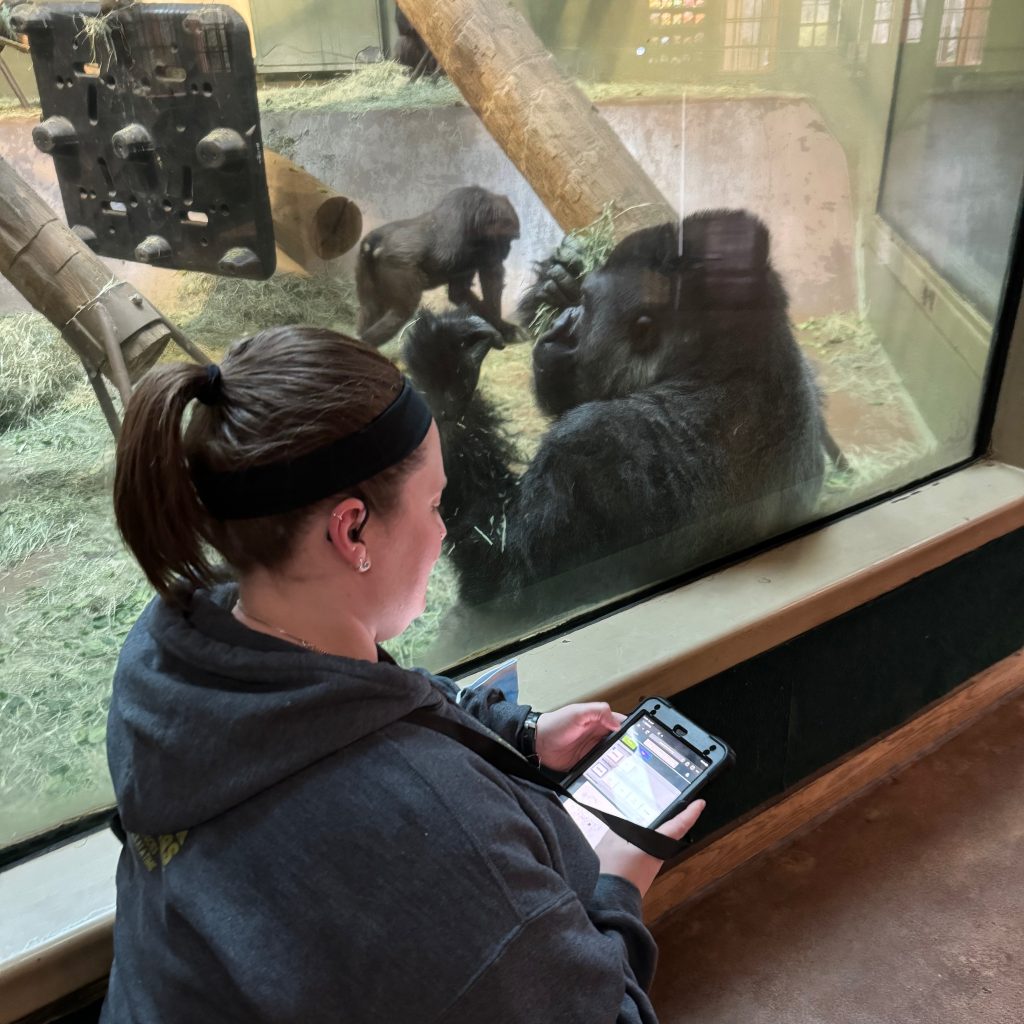
To measure activity, I conducted focal behavioral observations of 21 male western lowland gorillas across five AZA-accredited zoos, using instantaneous scan sampling to establish activity budgets. Total energy expenditure (TEE) was estimated in a subset of individuals using the doubly labelled water method, a metabolic analysis of urine samples, which allowed me to evaluate physiological energy expenditure without invasive procedures. The combined behavioral and physiological approach used in this study allowed me to examine both what gorillas were doing and how their bodies allocated energy, providing a more complete picture of their energetic balance.
What effect did age and health condition have on gorilla activity and total energy needs?
Age and health condition were important factors shaping activity patterns and energetic strategies in male gorillas. Younger males, particularly those undergoing sexual maturation, showed evidence of elevated energetic demands that may reflect the costs associated with growth, social competition, and physiological development. Males with cardiovascular disease often exhibited higher rates of inactivity, which may compensate for the higher energetic demand of their diseased state. These data suggest that gorillas can adjust their behavior and physiology in ways that partially buffer these energetic challenges. These findings highlight that energetic needs are dynamic and closely tied to life history stage and health status.
What are the “physiological and behavioral adjustments” that can be made to offset energetic costs?
Gorillas appear capable of adjusting their behavior to manage the energetic costs of their physiological state. Behavioral adjustments can include shifts in activity budgets, such as spending more time resting or feeding when energetic demands are high. Physiologically, primates may regulate metabolic processes to maintain overall energy balance even when activity levels change. These adjustments align with the constrained energy expenditure model, which suggests that animals maintain relatively stable total energy budgets by reallocating energy across physiological systems. Understanding these compensatory mechanisms helps explain why changes in activity do not always produce proportional changes in total energy expenditure.
How can these findings be applied to individualized nutrition and management strategies to optimize gorilla welfare in zoo settings?
These findings support a more individualized approach to gorilla management that accounts for differences in age, development, and health status. For example, maturing males with higher energetic demands may benefit from diets and feeding strategies that encourage sustained foraging and appropriate caloric and nutrient intake. Conversely, older gorillas or individuals with cardiovascular disease may require careful dietary management combined with enrichment designed to promote physical activity. Integrating behavioral monitoring with nutritional analysis allows care teams to better align diet composition, feeding schedules, and enrichment programs with each gorilla’s energetic profile. Ultimately, this approach helps create management strategies that support both metabolic health and natural behavioral expression.
What are the next steps for this research?
Future research should focus on expanding this work to more individuals and more institutions to better understand variation across populations and management contexts. One important next step is integrating energetic data with detailed nutritional analyses to examine how diet composition influences energy balance and health outcomes. Longitudinal studies will also be critical for tracking how energetic patterns change as gorillas age or transition between social and housing conditions. Additionally, applying these methods to females and other ape species will help provide a more complete picture of ape energetic strategies. Ultimately, the goal is to translate these findings into practical, evidence-based guidelines that support the long-term health and welfare of gorillas and other apes in managed care.
The ASP “Hot Topics in Animal Welfare” are produced by the ASP Primate Care Committee. These quarterly posts showcase the work of ASP members who are working to enhance and refine primate welfare across settings, in captivity and the wild.